ODY New Books Collection
New Books
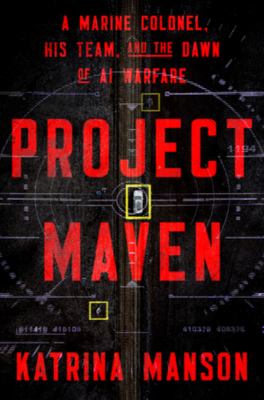
Project Maven
A Marine Colonel, His Team, and the Dawn of AI Warfare
Authored by: Katrina Manson
"The dramatic story of the secretive decade-long Pentagon campaign to deliver America into the age of AI warfare."-- Publisher
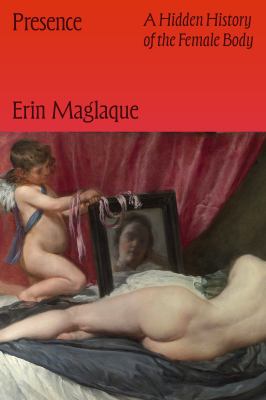
Presence
A Hidden History of the Female Body
Authored by: Erin Maglaque
"A vibrant history of women's bodies, expertise, and work." -- Provided by publisher
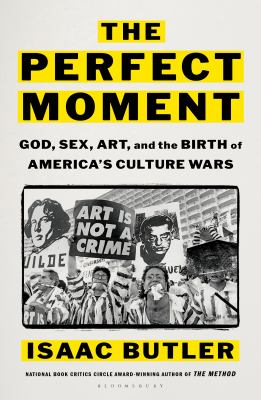
The Perfect Moment
God, Sex, Art, and the Birth of America's
Culture Wars
Culture Wars
Authored by: Isaac Butler
"It's 1988, the final year of the Reagan presidency, and the curtain is closing on the Cold War. In the absence of external adversaries, the American public is on the precipice of war with itself. The religious right, newly ascendant and emboldened, is determined to seize control of America's future. And the first battles will be fought over, of all things, contemporary art. In The Perfect Moment, cultural historian Isaac Butler reexamines this pivotal, misunderstood American era. Archconservatives like Jesse Helms, Pat Buchanan, and Pat Robertson fixed their sights on artists including Andres Serrano, Robert Mapplethorpe, David Wojnarowicz, and Karen Finley, capitalizing on the provocative politics of their work to stir a nascent evangelical coalition into moral panic. It was at this moment, Butler argues, that the far right perfected the tactics it still uses today to whip its base into frenzy-from banning books and sanitizing American history, to spreading medical misinformation. All too relevant today, The Perfect Moment is an incisive and meticulously researched account of this crucial period and a stirring ode to the power of the creative spirit."-- Provided by publisher

A Pair of Aces
Authored by: Marie Benedict and Victoria Christopher Murray
Assistant district attorney Eunice Carter, Manhattan's first Black female prosecutor, develops a strategy to prosecute organized crime boss Charles 'Lucky' Luciano by targeting his involvement in prostitution rather than his more visible criminal enterprises. Unable to build the case alone, she forms an uneasy alliance with brothel owner Polly Adler, whose workers have been endangered by Luciano's expanding control. Drawing on a network of women from sharply different social worlds, the two gather evidence against Luciano while risking retaliation from the criminal organization. Set in New York City, the novel centers on the collaboration that leads to a landmark organized crime trial.
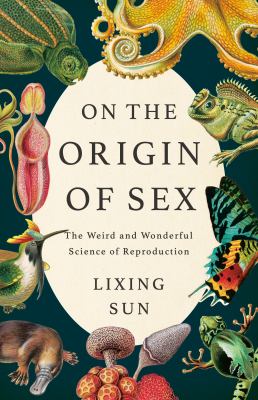
On the Origin of Sex
The Weird and Wonderful Science of Reproduction
Authored by: Lixing Sun
"Let's talk about sex. Not boring, human sex, but the endlessly fascinating, varied, and complex forms of reproduction in the rest of the natural world. Biologist Lixing Sun has spent decades researching sexual reproduction and evolution using behavioral experiments, genetic testing, and mathematical and computer modeling. In On the Origin of Sex, he reveals the wild and weird world of how creatures reproduce. In slime molds, sex can involve dozens -- or even hundreds -- of mating types, or proto-sexes. Among certain algae, nearly every individual can mate with almost any other -- a veritable free-for-all. Meanwhile, whiptail lizards and California condors are just two among the many vertebrate species capable of parthenogenesis. Clownfish sequentially change from male to female, and bearded dragons can undergo temperature-dependent sex reversal, all of which challenge the notion that sex is binary and fixed in the natural world."-- Provided by publisher
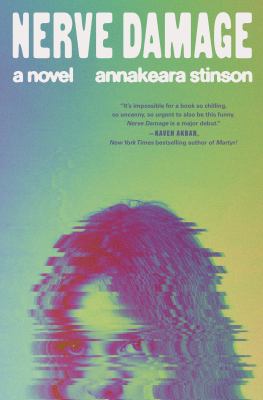
Nerve Damage
A Novel
Authored by: Annakeara Stinson
"A riotous revenge novel about a woman's quest to escape her stalker ex-boyfriend-by stalking him herself."-- Provided by publisher
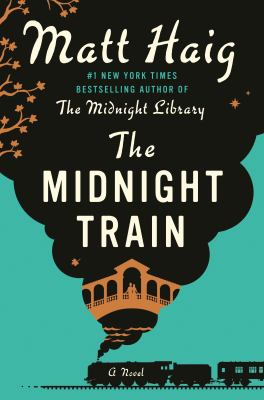
The Midnight Train
Authored by: Matt Haig
"When your life flashes before your eyes, where would you stop? No one can change the past, but the Midnight Train can take you there. The chance to re-live the moments that meant most. To see what kind of person you really were. For Wilbur his best days were with Maggie, the love of his life. On his honeymoon in Venice. Before he gave it all away. He wishes he could go back and live differently. But to do so risks everything . . . A magical, time-travelling love story, from the world of The Midnight Library."-- Provided by publisher
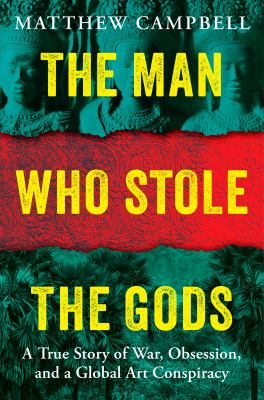
The Man Who Stole the Gods
A True Story of War, Obsession, and a Global Art Conspiracy
Authored by: Matthew Campbell
"Amidst the chaos of Cambodia's brutal genocide, a new crime wave emerged -- one that would sweep across borders and entangle the world's most prestigious art institutions. Priceless treasures of the ancient Khmer Empire, the civilization that produced Angkor Wat, vanished from sacred temples, looted by smugglers and trafficked into the hands of elite collectors. At the center of it all was a man named Douglas Latchford. Known later as 'Dynamite Doug' for the ruthless methods used to extract statues from temple ruins, Latchford orchestrated one of history's most audacious cultural heists. From dusty Cambodian villages to the glittering auction houses of London and New York and institutions like the Met, he played a double game -- posing as an expert on Khmer art while secretly flooding the market with stolen antiquities. In The Man Who Stole the Gods, award-winning journalist Matthew Campbell unravels the gripping, stranger-than-fiction story of Latchford's criminal enterprise, and a global conspiracy of greed, corruption, and complicity -- one that involves some of the world's most powerful museums, collectors, and auction houses. A masterful blend of true crime, history, and investigative journalism, The Man Who Stole the Gods is the definitive account of one man's greed, an industry's complicity, and the fight to expose the truth and restore stolen treasures to their rightful home." -- Provided by publisher

Love and Death in the American Novel
Authored by: by Leslie Fiedler
"Leslie A. Fiedler's Love and Death in the American Novel is a study of American fiction from its beginnings up through the 1960s. In this tour de force from the great mid-twentieth-century era of literary criticism, Fiedler argues that American literature is gothic at heart, marked by a terror of sexuality and an obsession with violence, escape, and death. The American writer, he says, confronts a world that is 'without a significant history or a substantial past; a world which had left behind the terror of Europe not for the innocence it dreamed of, but for new and special guilts associated with the rape of nature and the exploitation of dark-skinned people.' Fiedler's own book, as brilliantly written as it is provocatively conceived, is itself a contribution to American literature. His puckish suggestion is that we read it 'not as a conventional scholarly book--or an eccentric one--but a kind of gothic novel (complete with touches of black humor) whose subject is American experience as recorded in our classic fiction.'" -- Back cover
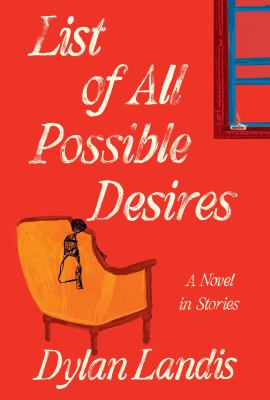
List of All Possible Desires
Authored by: Dylan Landis
A dazzling novel in stories from a master of the form that follows the Royal family across generations of obsession, betrayal, and reinvention. In postwar Paris, a boy is seduced by his mysterious nanny into a world of adult secrets. In 1950s New York, a young woman struggles to protect her stroke-stricken charge as bruises multiply on the woman's body. In the 1970s, a fragile cousin wanders into the Royals' jazz-soaked townhouse, where music, sex, and ruin intertwine. And at the heart of these stories is Rainey Royal herself, coming of age in Greenwich Village, inventing herself as an artist through the tumult of the '70s and '80s. By turns shocking, erotic, and deeply humane, List of All Possible Desires is a haunting portrait of family and history-written with Landis's trademark intensity and precision. This publication is joined by expanded reissues of the other two books in the Rainey Royal Cycle, the novel in stories Normal People Don't Live Like This and the novel Rainey Royal. Each book stands on its own, but together they echo and amplify one another, creating one of the richest and most intense worlds in contemporary American fiction.
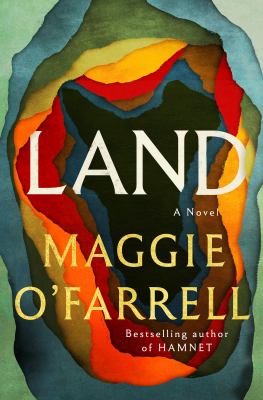
Land
A Novel
Authored by: Maggie O'Farrell
"The award-winning, bestselling author of Hamnet and The Marriage Portrait returns with a soaring historical novel set in Ireland in the years before and after the Great Hunger."-- Provided by publisher
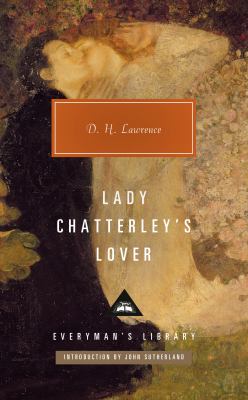
Lady Chatterley's
Lover
Authored by: D.H. Lawrence
With an introduction by John Sutherland
"Constance Reid, Lady Chatterley, is a young woman trapped in an unfulfilling marriage to an aristocrat whose war wounds have left him paralyzed. After her husband demands that she provide him with an heir, she enters into a liaison with their gamekeeper, a working-class man named Oliver Mellors. As their illicit relationship grows in tenderness, mutual respect, and sensual passion, Constance discovers that true fulfillment requires a real connection of both mind and body. Shocking to its original audience for its cross-class romance as well as for its explicit depictions of sex, the novel has long been hailed as the summit of Lawrence's artistic achievement and one of the most influential novels of the twentieth century." -- Amazon
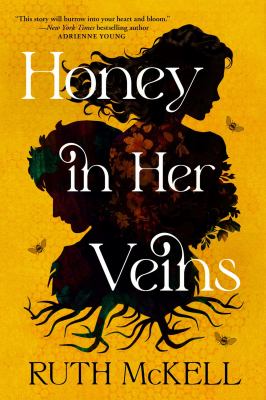
Honey in Her Veins
A Novel
Authored by: Ruth McKell
"Arthur Connoway desperately wants to free himself from the monster inhabiting his mind. Instead, he is rapidly losing control of it following his mother's death. In a last-ditch effort to feel whole again--and to lay his mother's memory to rest--Arthur decides to return to the quiet bee farm he once called home, hoping their sacred honey can heal him in more ways than one. Eight years ago, Eva Moreau's flora magic caused a terrible accident, harming her father in the process. Now, she's desperate to find a way to heal him, but her attempts only seem to do the opposite. If she could just learn to control her magic, she might be able to save her father and leave the past behind. When Arthur returns to town looking for absolution, Eva once again loses control of her magic, putting everyone she loves in danger. Together, the pair decides to trek to the source of her family's magic to find a cure for both Arthur and her father. But there's a mysterious ghost haunting the forest, and it won't let Arthur and Eva leave the woods without confronting the secrets of their past ..."--Amazon website
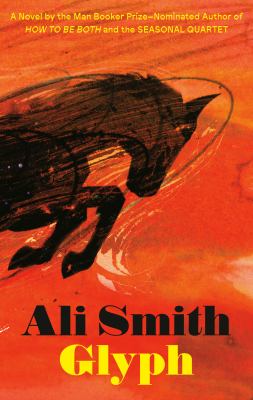
Glyph
Authored by: Ali Smith
"Ghosts don't exist. They don't. End of. Story, however. It is haunting. Everything tells it. It all starts when Petra and her little sister Patch hear a horrifying story from the past and find themselves making up a ghost. Is it imaginary? Is it real? Then it all starts again thirty years later when Petra, now estranged from Patch, finds a phantom horse kicking the furniture to pieces in her bedroom. What to do? She phones her sister. In a chiaroscuro dance through our increasingly antagonistic era, Glyph asks if we're attending to the history that's made us and to the history we're making. A funny, warm and clear-eyed take on where we are now, Glyph is about what our imaginations are for and how, in a broken, brutal and divided time, we rekindle care, solidarity, resistance and openness. This antiwar novel, Ali Smith's most soulful, playful and vital yet, is a work of lightness that goes deep to counter the forces currently flattening the modern world." -- Book jacket flap
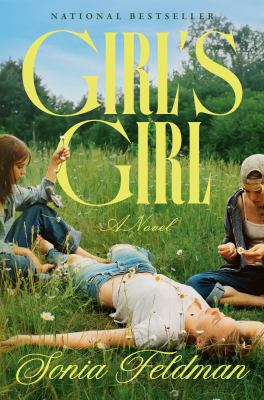
Girl's
Girl
A Novel
Authored by: Sonia Feldman
"One summer shatters the balance between three best friends, forcing them to confront the line between friendship and attraction. Fifteen-year-old Mina's whole world is her two best friends, but after an unexpected first kiss, the established dynamics of their trio quickly unravel. Everything that was once shared openly, from clothes to secrets, now feels impossibly fragile. Loyalties shift and tensions simmer across the long days of this pivotal summer, where the girls have nowhere new to go and everything new to feel. Looking back, an adult Mina traces the undercurrents of longing that shaped her first experience of desire. The rituals of girlhood -- gossip, selfies, sleepovers, and videogames -- become threads in a delicate, volatile web of intimacy, in which everything feels achingly fleeting and permanently etched. Loving one person, Mina learns, can shift the way we love everyone else -- including ourselves. Bold, vulnerable, and sharply funny, Girl's Girl is a sundrenched and dewy snapshot of modern girl culture set in the blaze of one suburban Midwest summer." -- Provided by publisher
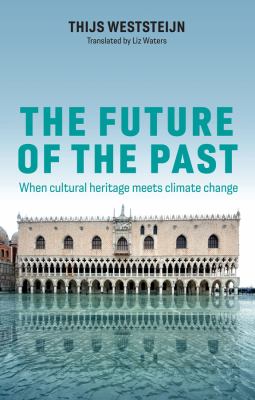
The Future of the Past
When Cultural Heritage Meets Climate Change
Authored by: Thijs Weststeijn
Translated by Liz Waters
"As the wooden piles under Amsterdam begin to rot, water levels rise in Venice. The 4,500-year-old ruins of Mohenjo-daro flood in Pakistan. Compaction of peat soil in northern England is causing Hadrian's Wall to collapse. The bricks of excavated Babylon are exploding as a result of increasing salt levels. Melting permafrost in Siberia is endangering the ancient burial mounds of the Scythian civilization. In the US, hurricanes have partially destroyed the heritage of New Orleans and Puerto Rico, while the 2019 wildfires forced the Getty Museum in Los Angeles to close. The climate crisis is threatening historical heritage all over the world, with higher temperatures, more storms and fires and, of course, rising sea levels. Monuments, buildings, inner cities and cultural landscapes are at risk, and museums such as the Louvre have already started relocating parts of their collections to climate-proof storage facilities. Written by a highly regarded art historian, The Future of the Past addresses this urgent issue and asks us to include the fate of beauty in our conversations on climate change. Extreme weather means we have to approach history in new ways. Historical heritage now confronts us not only with the past, but also the future." -- Book jacket
Freedom Round the Globe
A World History of the American Revolution
Authored by: Sarah M.S. Pearsall
In her powerful new history of the American Revolution, prizewinning historian Sarah M. S. Pearsall argues that the American Founding Fathers did not have a unique claim on the revolutionary spirit. The thirteen colonies that became the United States, she reminds us, were not even half of the British colonies that existed in the eighteenth century. Freedom Round the Globe uncovers the insurgents, freedom lovers, and dreamers in India, West Africa, North America, Europe, China, and West Indian islands who shaped the nature of American rebellion and nationhood. In each fresh and sparkling chapter of Freedom Round the Globe, Pearsall plucks a keyword from the Declaration of Independence--security, equality, respect-- finding its spark in a far-flung place. In an Edinburgh club where women were first invited into philosophical conversations, she explores what the pursuit of happiness meant to women and men of all sorts. She traces how accelerations in the scale and brutality of transatlantic slavery provoked a new emphasis on liberty in Anomabu, West Africa, that reverberated across the Atlantic in poetry, petitions, and cries of "liberty of death." On a Kolkata street where Indians protested relentless taxes, Pearsall finds a critique of oppressive imperial government that galvanized Americans in their protests and parties against the tea of the English East India Company. And in rural Germany, boy soldiers sent abroad to die for Britain complicate who can lay claim to being civilized in a brutal war. By telling the extraordinary tales of Friends of Liberty protesting tyranny around the world, Pearsall restores these individuals and movements to their rightful place in the vital story of the American Revolution and the nation it created. The result is a stirring and surprising revision of American history. Front and back book flap
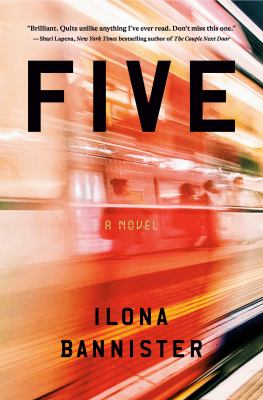
Five
A Novel
Authored by: Ilona Bannister
"Have you ever tried to pass the time by imagining the lives of the strangers standing next to you? Ilona Bannister's Five introduces readers to five seemingly random people waiting for a train. But these are not just any five people. From the beginning we know that one of them is going to die soon. Very soon. In five minutes the next train to London will arrive, killing one of them. But before this happens you will learn their stories. None of these people are saints. Readers might fall in love with the beautiful young man who is on the verge of gambling his life away. They may pity the cantankerous old woman who has fallen to the ground yet is refusing help. Perhaps readers will look away from the child throwing a tantrum. Or judge his mother, who must surely be to blame. And some will be curiously compelled by the successful and damaged businessman orbiting them all. These are the candidates for this morning's misfortune. But they don't know it. Only you know. And you, our complicit reader, will not be able to resist deciding who deserves to walk away, and who deserves only five more minutes to live. An incredibly original novel that breaks the fourth wall and asks the reader to be judge, jury, and executioner, Five looks at some of the most complicated issues of contemporary life: motherhood, disability, addiction. Every stranger has a story. And in Ilona Bannister's skillful hands, five people's stories come together to create an unforgettable novel."-- Provided by publisher

Fires in the Night
The Earth Liberation Front, the FBI, and a Secret History of Eco-Sabotage
Authored by: Matthew Wolfe
"In the early hours of October 28, 1996, a driver in rural Oregon spotted flames rising from a federal ranger station. Firefighters quickly extinguished the blaze, but not before discovering a cryptic phrase spray-painted on a nearby wall: "EARTH LIBERATION FRONT." Over the next decade, the Earth Liberation Front would carry out the most audacious series of politically motivated arsons in American history. Their targets-car dealerships, slaughterhouses, lumber companies, a $12 million Vail ski resort-were chosen to send a message: if the government wouldn't halt the destruction of the natural world, they would. Despite causing no deaths, the ELF would soon be branded the foremost domestic terrorism threat in America and become the target of one of the FBI's largest investigations. Fires in the Night is the definitive story of the ELF's rise and unraveling, stretching from the old-growth forests of the Pacific Northwest to the Seattle streets of 1999's legendary WTO protests to the paranoid aftermath of September 11. For years, members of ELF, many of them close friends, led double lives, meticulously planning and staging their attacks, using secret book clubs, dead drops, and anonymous communiques, while trying to manage interpersonal friction and stay one step ahead of a relentless task force of police and federal agents. Drawing on years of original reporting and interviews, including with reclusive activists breaking their silence for the first time, as well as thousands of pages of unreleased investigative files, journalist Matthew Wolfe offers a thrilling, intimate account of a moment in American life when the actions of radical environmentalists challenged mainstream complacency. As the climate crisis continues to accelerate, Wolfe asks the most pressing question of our time: facing the end of the world as we know it, exactly what kind of resistance is justified?" -- Provided by publisher

Extra Sauce
The Good, the Bad, and the Onions : a Memoir
Authored by: Zahra Tangorra
"At twenty-two years old, Zahra Tangorra was trying on adulthood and attempting to find herself when a harrowing near-death experience stopped her in her tracks. It felt like a twisted version of a second chance. Who am I? she asked herself. What do I love? The answers started coming to her: Stuffed shells and giant meatballs at J&J's, the Italian red sauce joint of her Long Island childhood. Her mother's chocolate mousse pie and her father's sweet and savory pea soup. The people, places, and experiences that made her her, the relationships both loving and fraught--they were all, for better and sometimes worse, inextricably bound up with food. In this memoir that celebrates both the delicious and the messy in life, Zahra reckons with the adrenaline-filled highs and devastating lows of opening cult-favorite Brooklyn restaurant Brucie and then closing it at the height of its popularity. From cooking her father his last meal and the unexpected yet beautiful things she found at the bottom of her grief to the relationships she couldn't save through cooking, like her fractured family and the lover she had to leave in Tuscany, Zahra writes about the immense courage it takes to allow ourselves to be loved, extra sauce and all." -- Amazon