ODY New Books Collection
New Books
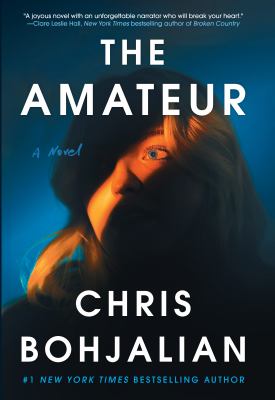
The Amateur
A Novel
Authored by: Chris Bohjalian
"When a young woman, a golf prodigy, kills a caddy with a stray ball at the country club, the investigation of this freak accident reveals a dark and shocking tale of secret affairs and predatory men, and suddenly a teenager is on trial. 1978: It is the first Thursday in August and temperatures are flirting with ninety when Mira Winston, eighteen years old, drives a golf ball from her tee toward the practice net near the clubhouse and caddy shack. The golf ball, weighing 1.6 ounces, tears through the net, traveling 150 miles per hour, and slams, with sickening force, into the temple of a high school junior named Kenny Foster, rupturing an artery and unleashing a torrent of blood. Kenny brings his hand to the side of his head, then topples onto his side. He's dead before the ambulance even arrives. In the wake of this terrible accident--and everyone, at first, agrees it was an accident--Mira looks for comfort in all the wrong places: In her lover, Theo Catton, a married man three decades her senior. In her mother, a well-kept woman with secrets of her own. In the dead caddy's little sisters, girls bewildered by grief. But when the investigators look more closely at the torn net, when a detective recalls Mira's history of recklessness, and when Kenny's father spies Mira with her married lover, the affluent and mannered community turns on this once-promising young woman. A gripping story that takes the reader from the sun-soaked greens of a tony Westchester country club to the fluorescent-lit stand of a county courtroom, The Amateur asks: What happens when one small moment--a swing, a ball, a piece of string--changes the course of an entire life?"-- Provided by publisher
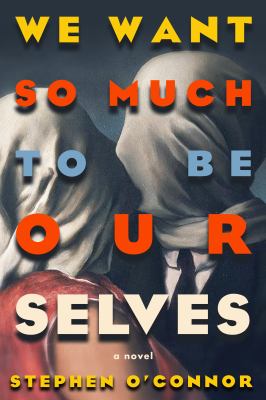
We Want so Much to Be Ourselves
Authored by: Stephen O'Connor
"Günter Zeitz, psychoanalyst-in-training and the son of a Catholic country doctor, and Josine Rosen, Sigmund Freud's patient and the daughter of a Jewish shipping magnate, first meet in 1924, in Freud's Viennese waiting room. As their intense affair develops, Freud arranges for Günter's appointment to the newly created Berlin Psychoanalytic Institute. Shortly after the move, their daughter Hannah is born. But less than a decade later, all their hopes and ideals are profoundly challenged by political realities so horrific that they are, initially, beyond comprehension. A heartrending story of love in a time of hatred, an absorbing investigation into the Nazis' exploitation of psychoanalysis, and a cautionary tale about self-deception and the failures of a people to recognize the lies of their charismatic leader, We Want So Much to Be Ourselves examines the ways science can be corrupted and one's very identity transformed by historical circumstance." -- Page [4] of cover
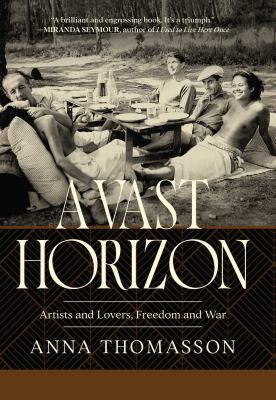
A Vast Horizon
Artists and Lovers, Freedom and War
Authored by: Anna Thomasson
"Late summer 1937. Europe is inching toward war. In the South of France a group of friends picnic in a secluded clearing. The women have peeled down their dresses to their waists. Shoes have been cast aside. A couple kiss playfully while the others look on, laughing. The moment is captured in a now-iconic image by photographer Lee Miller. Some of the friends--the dancer Ady Fidelin, the poet Paul Éluard and his wife Nusch, the Surrealists Man Ray and Roland Penrose--are well-known, others less so. They are spending the summer at the Hôtel Vaste Horizon in Mougins with fellow artists Dora Maar, Eileen Agar, and Pablo Picasso. In this evocative setting, biographer Anna Thomasson traces the group's individual and intertwined lives through the photographs they took, the art they made, and the poems and letters they wrote. From the heady, fertile weeks of creativity, sex, and collaboration of that Mediterranean summer through the tumultuous years that followed, this is the story of rebellious lives and the redemptive power of art."-- Publisher's description
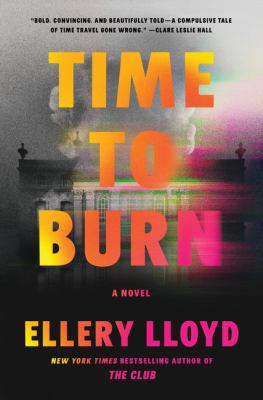
Time to Burn
A Novel
Authored by: Ellery Lloyd
"Mercurial tech entrepreneur Inigo Frank has perfected commercial time travel, though it is tightly regulated and so expensive that it's open only to the very wealthiest. His company, Tempus Tours, has so far been approved for just one route: a journey back to London in 1941, to the days of the Blitz, allowing the super-rich to experience the awesome sights and sounds of the aerial bombardment of the capital during World War II. It's a slick operation--routes across the wartime city are meticulously plotted, guides are extensively trained, and rules for the time tourists are strictly enforced. To immortalize his achievement, Frank enlists award-winning filmmaker Phoebe Hunt to create a fly-on-the-wall documentary. On her first day shadowing Inigo, she is set to witness the return of a billionaire property developer and his family from their trip to the past. But instead of their awe-filled return, she captures the group arriving bloodied and traumatized, with one of their number missing. Not only that, but Phoebe recognizes the missing woman, and knows not only that she's not who she claims to be but that she has every reason to harbor a grudge against her. And as events begin to unravel in the present day, it seems increasingly clear that she had sinister motives for returning to the past--and that people close to Phoebe are in danger. Phoebe must race to untangle the truth--before past and the future are rewritten."-- Provided by publisher
Scavenging Beauty
A Memoir in Walks
Authored by: Angelica Glass
"The memoir of a woman who dedicates herself to walking every street in her county to heal from decades of trauma. As a social worker in California, Angelica Glass spent her career helping families struggling with poverty, abuse, and neglect. When she realized that the stress of her job was becoming overpowering, she turned to walking as an outlet. Yet what began as a chance to exercise her body turned into something much more: a years-long odyssey in which Glass drew on the cathartic beauty of nature, the discipline of exercise, and the healing power of reflection to confront her own past. The more she walked, the more she found what she rarely had growing up: solace and forgiveness. One of eight children born to parents who suffered from addiction and mental illness, Glass had survived privation, hunger, and abuse, and for a time lived on the streets and in foster care. Despite these challenges, she eventually finished high school, graduated from college, established stable long-term relationships, and raised two sons. In the process, she learned that it was by drawing on nature to heal herself - by scavenging beauty on her terms - that she began to understand that we do not have to be prisoners of our pasts. By turns intimate and sweeping, evocative and eye-opening, Scavenging Beauty is a powerful and hopeful celebration of how nature can help us heal from within." -- Provided by publisher
The Savage Landscape
How We Made the Wilderness
Authored by: Cal Flyn
"From the black sand beaches of Iceland and river crossings deep in the Amazon jungle, to the barren beauty of Antarctica, wildernesses make up some of the world's more alluring natural landscapes. But what is a wilderness, really? It is a powerful, ancient concept at the intersection of landscape, philosophy, and ecology. For thousands of years, people have sought out uncontrolled, unknown, or uncharted nature in search of religious epiphany, self-actualization, and an escape from modern life. More recently these 'pristine' places have been seen as the subject of a last effort to repair a planet imperiled by humans. As award-winning writer Cal Flyn traverses the most forbidding, untamed and inhospitable wild lands--the supposedly uninhabited wilds of the world--she finds that such truly untouched lands don't exist: Nearly every 'wilderness' has been or is actively inhabited by humans. Here we meet ascetics in search of theophany in the desert, lonely shepherds running off wolves under the stars, missionaries preaching from shacks deep in the jungle, and wise lamas meditating under lofty mountain peaks. The Savage Landscape takes us to these breathtaking wilds--dark forests, the tops of mountains, and the hearts of deserts--asking provocative questions about the nature of wilderness, its preservation, and its meaning."-- Front book flap
The Responsible Party
A Novel
Authored by: Claire Carusillo
"Claire grew up with the legend of the Unsinkable Mounsey Women. Her great-great-grandmother Fanny made headlines in 1915 for washing ashore in England nearly a year after her ship sank. Fanny's daughter Sarah went to collect her mother on the equally ill-fated Lusitania--whose sinking she, too, survived. Their improbable endurance led to regional stardom on the Midwestern vaudeville circuit. But Claire never knew the full story--until now. Listless, jobless, and recently canceled for extolling skin-care advice online that sent a reader to the hospital, Claire is surprised when a knock at the door turns out to be the police, looking for answers about a murder from the 1970s they suspect her mother, Kath, may know something about. As the cops zero in, Claire demands answers from her mother. Kath's comically long response, which blossoms into the story of the Mounseys and their descendants writ large, moves from a Liverpudlian poorhouse at the onset of World War I to a Lake Michigan lighthouse in 1971 (when sex was freer and McDonald's fried their potatoes with beef tallow) to present-day Chicagoland; along the way, it offers Claire a richer understanding of what she inherited from the complicated, resilient women she descends from. Replete with inappropriately old boyfriends, dubious medical professionals, and more than a few boats, The Responsible Party is the story of several women, in several different timelines, trying to stay afloat."-- Provided by publisher
Range
A Novel
Authored by: Dorthe Nors
Translated from the Danish by Caroline Waight
Gunn Haven, professor of astrophysics, has taken a leave from the institute where she teaches and moved to a rural area. She's here for the clear night sky and for solitude as she tracks gamma-ray bursts and researches the origins of the universe. But while Gunn studies celestial bodies, she is also contending with earthly bodies. There are her nearest neighbors: Brit, who knows everyone's business, and Jenny, Brit's restless teenage daughter. There is her young protégé; Gunn has sent him away to find his own path, yet longs to have him close. There are remote colleagues and dead loved ones, often in her thoughts. And there is the menacing Gable Woman, who, after catching Gunn wandering onto private property, is intent on putting her in her place. How to navigate the humanmade boundaries of a boundless universe? How to be a caretaker if you're not a mother and stand apart in your communities? Gunn's mind ranges over these questions as she splits firewood, walks the forest, solves equations, sits in hunting stands, lies in fields, and observes--the animals, the locals, the seasons, the stars, her memories. Reaching from the everyday to the infinite, from sensory details to contemplations of the cosmos, Range is a gripping investigation of the many kinds of distance we cross through space and time.
The Nerd Reich
Silicon Valley Fascism and the War on Democracy
Authored by: Gil Durán
When Silicon Valley says it is 'moving fast and breaking things,' the world interprets the chaos as a necessary cost of innovation. Gil Durán reveals something far more sinister: a decades-long campaign to replace elected governments with corporate rule. Drawing on insider political experience and new investigations, Durán traces this ideology from its philosophical roots in The Sovereign Individual by James Dale Davidson and Lord William Rees-Mogg. He introduces its modern apostles - some of Silicon Valley's biggest names - and shows how the promise of technological liberation has transformed into a global movement for digital feudalism, powered by cryptocurrency, artificial intelligence, and the algorithmic propaganda of social media. The Nerd Reich explains the origins, strategies, and ambitions of Silicon Valley's war on democracy for the first time. From San Francisco's weaponized elections and secret billionaire projects to the White House, Durán exposes how the world's richest men are building a new political order. The Nerd Reich is more than a hidden history, it's an urgent warning: democracy is being dismantled not by coups or tanks, but by code, capital, and the illusion of innovation. Durán insists there is still time to fight back--if we act now.
A Librarian's
War
The Man Who Fought World War II with Books and Brought the Joy of Reading to Millions
Authored by: Molly Guptill Manning
"A Librarian's War is a biography of Ray Trautman, whose childhood in a rural town with no library and few books ignited a lifelong passion to ensure no one would struggle as he did to access reading materials. He nurtured his love of books as a bookseller, librarian, literacy educator, Army officer, and professor. During World War II, he distributed hundreds of millions of books and magazines to troops despite book bans and resistant generals. After the war, he helped improve rural library access, built recreational libraries in prisons, worked to improve literacy for adults, and campaigned for more and better titles for the visually impaired. Through his efforts, the book-reading population skyrocketed and generations of Americans discovered the joy of reading."-- Provided by publisher

Hannah Arendt
A Life of the Mind
Authored by: Thomas Meyer
Translated by Shelley Frisch
"A revelatory, long-awaited, and definitive intellectual biography of Hannah Arendt, one of the greatest philosophers of the twentieth century Drawing on newly discovered archival materials and previously overlooked documents-from both Germany, where Arendt was born to a Jewish family in 1906, and the United States, where she was a citizen from 1950-Thomas Meyer tells the story of an intellectual icon whose character and ideas continue to captivate and challenge us to this day. Tracing anew Arendt's journey from Königsberg to Paris, where she fled to after being imprisoned by the Gestapo in 1933, and finally to New York, Meyer illuminates her formative years and the development of her radical and brilliant books, as well as her long love affair with Martin Heidegger, whose Nazism posed a deadly threat to Arendt's life and family. His account centers on two pivotal phases-Arendt's years in Paris after fleeing Nazi Germany and her years in the U.S. leading up to the landmark publication of Origins of Totalitarianism-providing not only a meticulous reconstruction of her life but also a compelling invitation to rethink her legacy for our times. At a time of acute political polarization, with liberalism in crisis and urgent debates about freedom, responsibility, and truth unfolding all around, Arendt's writings and ideas resonate more powerfully than ever. Meyer's account of her extraordinary life is groundbreaking and sensational, not just for his illuminating and peerless research, but also for his incisive exploration of what Arendt's work has meant over the decades-and continues to mean for us today. Timely and Definitive: Now is the moment for a major new biography of liberalism's most towering and influential thinker whose ideas on totalitarianism, genocide, Zionism, and much else speak directly to our many global crises. No major scholarly biography has appeared for decades. Unprecedented and Revealing Archival Research: Drawing on newly uncovered documents and rich, untapped archival material, Meyer's biography offers fresh and startling insight into Arendt's life, work, and the historical forces that shaped her thought. Scholars will have to reckon with his findings. A Major Biographer's First Book in English: This is the first book to be translated by the acclaimed German scholar Thomas Meyer whose work is already famous in his homeland. He is fluent in English and eager to promote the book through media and press. Sparkling Translation: Award-winning translator Shelley Frisch has translated many biographies of major writers and is peerless in her work. Her name will draw in connoisseurs of translation and German literature." -- Provided by publisher
Furious Violet
A Novel
Authored by: Sarai Walker
"Violet 'West' Shelly has unwillingly spent her life in the spotlight, as the only daughter of a legendary poet and feminist icon who died tragically young. Now, as the self-described 'lowbrow' crime journalist approaches fifty--burned out, creatively blocked, and far older than her mother ever was--she retreats to her hometown in the Colorado mountains to finish a long-overdue book about the 'Crying Killer,' a notorious serial killer who sobs for his mother after committing his crimes. But what begins as a bid for solitude quickly spirals into something far more sinister. A stalker emerges--mysterious, relentless, with accusations disturbingly intimate: an invisible stranger who insists that West is their long-lost mother, though West has never had children. As threats escalate and her carefully defended privacy starts to shatter, West is drawn into a chilling psychological web where the boundaries between fiction and reality collapse. Is she being watched? Hunted? Or is her own mind turning against her?"-- Front jacket flap
Etna
A Novel
Authored by: Paul Yoon
"Set in a fictional country in the present day, this is a story told through the eyes of an ex-military dog, Etna. After surviving years of a devastating war, Etna decides one night to leave the men he has fought alongside for years and return home--to the place where he was taken from when he was young, in the thin but persistent hope that if a home exists for him, it might be there. Thus begins an exhilarating odyssey told through the eyes of a dog as he traverses across ruined landscapes and fights to survive in a world that, even in peacetime, proves to be just as precarious. Along the way, he encounters other animals and humans who are attempting to figure out how to start again. What makes a life when there is no home to go back to? How do we begin to trust each other again after such profound loss? This is a novel about the power of an idea, about never giving up, and ultimately a novel about finding hope in the most dire of times."-- Provided by publisher
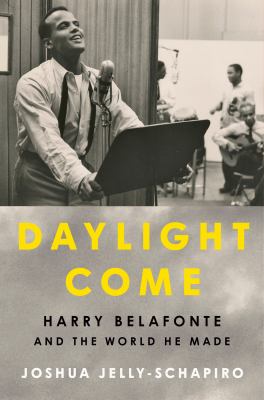
Daylight Come
Harry Belafonte and the World He Made
Authored by: Joshua Jelly-Schapiro
"A vibrant, revealing portrait of the "King of Calypso," whose extraordinary performing career and activism helped remake America through the civil rights era and beyond. Even two years after his death, Harry Belafonte is everywhere. You can't go to a wedding, or to Yankee stadium, without hearing "Day-O," "Jump in the Line," or "Turn the World Around." The Harlem-born son of Caribbean immigrants, Belafonte turned the folk music of the islands into American pop-and with it invented the fantasy of Caribbean life that endures as an ideal and as a multibillion dollar tourist industry. Belafonte released the first million-selling LP in history. He was America's first Black movie star, the first Black person to produce a primetime special on network TV, and the first to win an Emmy. He was once the highest-paid Black performer of all time, beloved by Black and white fans alike, even under segregation. His artistic career helped create the pop culture of the twentieth century-and his political activism reshaped the course of American history. In this sparkling new biography, Joshua Jelly-Schapiro brings Belafonte's personality and music vibrantly to life, following him from rags to riches and from Harlem to Jamaica to the March on Washington. Jelly-Schapiro takes us inside Belafonte's lifelong brotherhood with Sidney Poitier, his friendship with Fidel Castro, his collaboration with Nelson Mandela, and the sometimes-shocking therapeutic relationships his difficult upbringing necessitated. At the heart of the story is Belafonte's bond with Martin Luther King Jr., whose cause Belafonte would champion for the rest of his life. That commitment to the greater good would sustain him and benefit untold numbers-and would come at a cost. The indelible story of an American icon-and a provocative study of authenticity, fame, and conviction-Daylight Come is, like Harry Belafonte himself, brimming with style and consequence." -- Provided by publisher
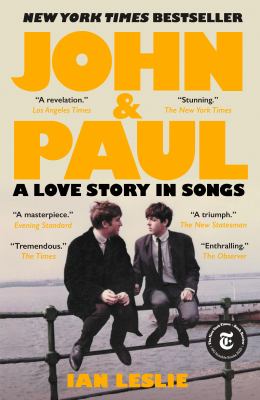
John & Paul
A Love Story in Songs
Authored by: Ian Leslie
"John Lennon and Paul McCartney knew each other for twenty-three years, from 1957 to 1980. This book is the myth-shattering biography of a relationship that changed the cultural history of the world. The Beatles shook the world to its core in the 1960's and, to this day, new generations continue to fall in love with their songs and their story. At the heart of this phenomenon lies the dynamic between John Lennon and Paul McCartney. Few other musical partnerships have been rooted in such a deep, intense and complicated personal relationship. John and Paul's relationship was defined by its complexity: compulsive, tender and tempestuous; full of longing, driven by jealousy. Like the band, their relationship was always in motion, never in equilibrium for long. John & Paul traces its twists and turns and reveals how these shifts manifested themselves in the music. The two of them shared a private language, rooted in the stories, comedy and songs they both loved as teenagers, and later, in the lyrics of Beatles songs. In John & Paul, acclaimed writer Ian Leslie uses the songs they wrote to trace the shared journey of these two compelling men before, during, and after The Beatles. Drawing on recently released footage and recordings, Leslie offers us an intimate and insightful new look at two of the greatest icons in music history, and rich insights into the nature of creativity, collaboration, and human intimacy."-- Provided by publisher
The Eyes Are the Best Part
Authored by: Monika Kim
"Ji-won's life tumbles into disarray in the wake of her Appa's extramarital affair and subsequent departure. Her mother, distraught. Her younger sister, hurt and confused. Her college freshman grades, failing. Her dreams, horrifying . . . yet enticing. In them, Ji-won walks through bloody rooms full of eyes. Succulent blue eyes. Salivatingly blue eyes. Eyes the same shape and shade as George's, who is Umma's obnoxious new boyfriend. George has already overstayed his welcome in her family's claustrophobic apartment. He brags about his puffed-up consulting job, ogles Asian waitresses while dining out, and acts condescending toward Ji-won and her sister as if he deserves all of Umma's fawning adoration. No, George doesn't deserve anything from her family. Ji-won will make sure of that. For no matter how many victims accumulate around her campus or how many people she must deceive and manipulate, Ji-won's hunger and her rage deserve to be sated. A brilliantly inventive, subversive novel about a young woman unraveling, Monika Kim's The Eyes Are the Best Part is a story of a family falling apart and trying to find their way back to each other, marking a bold new voice in horror that will leave readers mesmerized and craving more."-- Publisher's website
Human Raised
Nurturing Connection, Curiosity & Lifelong Learning in the Age of AI
Authored by: Dana Suskind, MD
"A timely, urgent guide to parenting in the age of artificial intelligence-and protecting what matters most in childhood."-- Provided by publisher
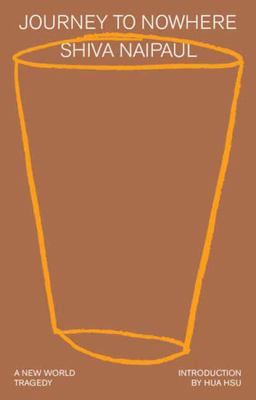
Journey to Nowhere
A New World Tragedy
Authored by: Shiva Naipaul
"A timeless classic that recounts the origins of the Jonestown Massacre as well as the U.S. culture wars of the late 60s and 70s In this harrowing and unflinching work of reportage, acclaimed writer Shiva Naipaul travels deep into the ideological wreckage of the Jonestown massacre--seeking not only to understand the tragedy in Guyana, but to trace the broader crisis of faith, belonging, and disillusionment that made it possible. With characteristic wit and fierce intelligence, Naipaul investigates the rise and fall of Jim Jones and the People's Temple, but his journey takes him far beyond the jungle compound. From California's radical enclaves to the fringes of Caribbean politics, he uncovers a tangle of social desperation, utopian yearning, and political naiveté that stretches across the Americas. Journey to Nowhere is more than a chronicle of one cult's collapse-it is a searing meditation on idealism gone awry, and a sobering reflection on the perils of misplaced hope in a fractured world. Relentlessly observant and darkly perceptive, this is Naipaul at his most urgent: confronting the illusions of progress and the cost of blind belief in the modern age." -- Provided by publisher
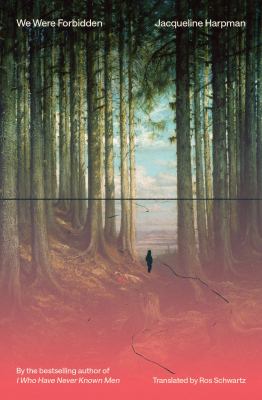
We Were Forbidden
Authored by: Jacqueline Harpman
Translated from the French by Ros Schwartz
In this newly translated collection of three novellas, Jacqueline Harpman explores the many forms of resistance in the face of oppression. A woman trapped in a mysterious postwar forest struggles against strict rules governing the survivors' existence. A schoolgirl in 1940s Casablanca risks severe consequences when she dares to question authority. And a young wife confined by the expectations of an unhappy marriage begins to awaken to desires of her own. Thought-provoking and psychologically rich, these stories examine freedom, identity, and the enduring human urge to defy limitations.
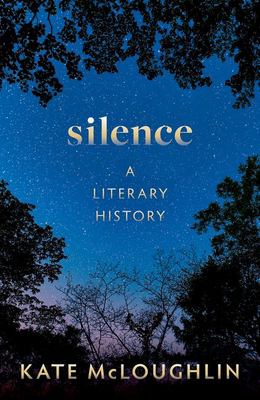
Silence
A Literary History
Authored by: Kate McLoughlin
"A majestic literary history, revealing the power and possibilities of silence found in literary works. Silence: A Literary History traces silences over twelve centuries of English literature, from the solitary states of exile on icy seas described in Anglo-Saxon poems to searches for silence in our own Age of Pings. This pioneering work of 'big' literary history encompasses exalted states of blissful union with the divine and with the natural world, the deep hushes of intimacy, spell-binding silent scenes on stage, encrypted expressions of same-sex love, the great literary epics of inarticulable grief, the game-changing idea of silence within the mind, the failure of words in the face of two World Wars, the hilarious awkwardness of some social silences, the echoing absence of lost voices, and silences as a powerful form of protest. Throughout, Kate McLoughlin illuminates the intellectual and cultural influences shaping our relationships with silence and explores the paradoxical ways in which authors create silences through words. Medieval lyricists express complex theological notions through simple lullabies shushing babies to sleep. Renaissance sonneteers protest their tongue-tiedness in dazzling displays of verbal ingenuity. Shakespeare creates silences that stage violent misogyny, calculating statecraft, the hurt of having to grow up and hard-won equanimity. Out of political favour at the Restoration, Milton dreams of a silent paradise. Wordsworth and Coleridge are dumbfounded by the sublimity of God's creation. Jane Austen deflates pomposities with perfectly-timed pauses. Tennyson composes a three-thousand-line poem about the death of his best friend leaving him lost for words. Virginia Woolf repeatedly writes a novel about the things that people don't say. In Silence: A Literary History, Kate McLoughlin explores such silences in all their richness and variety, illuminating the intellectual, cultural, political, and religious traditions that shape them. Across English literature silences emerge as powerful, moving, and sometimes very funny." -- Amazon website