ODY New Books Collection
New Books

Awake Awake
Authored by: Fiona Mozley
"A writer in her 30s struggling to make rent, Mary has moved back to her childhood town to bartend and save money, when she starts remembering absurd events, clear and visceral as if they'd really happened to her. But she knows they're too wild to be possible. Flashing back to her school years, she searches the past for what could have caused this split in her reality. The lives of their close group of school friends have since diverged, as life choices and politics, partners and children, have taken them to different places and placed them into other stories. But Mary must reconnect with them to find solid ground again. Set against the disorienting and rapidly changing political backdrop of the 2000s and 2010s, Booker Prize finalist Mozley's disarming coming-of-age tale is addictively readable, and poignantly captures the shakiness of identity--both personal and national--and the anchoring force of friendship." -- Dust jacket flap
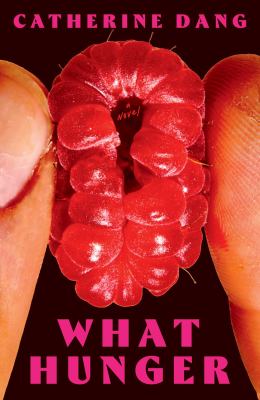
What Hunger
Authored by: Catherine Dang
"It's the summer before high school, and Ronny Nguyen finds herself too young for work, too old for cartoons. Her days are spent in a small backyard, dozing off to trashy magazines on a plastic lawn chair. In stark contrast stands her brother Tommy, the pride and joy of their immigrant parents: a popular honor student destined to be the first in the family to attend college. The thought of Tommy leaving for college fills Ronny with dread, as she contemplates the quiet house she will be left alone in with her parents, Me and Ba. Their parents rarely speak of their past in Vietnam, except through the lens of food. The family's meals are a tapestry of cultural memory: thick spring rolls with slim and salty nem chua, and steaming bowls of pho tái with thin, delicate slices of blood-red beef. In the aftermath of the war, Me and Ba taught Ronny and Tommy that meat was a dangerous luxury, a symbol of survival that should never be taken for granted. But when tragedy strikes, Ronny's world is upended. Her sense of self and her understanding of her family are shattered. A few nights later, at her first high school party, a boy crosses the line, and Ronny is overtaken by a force larger than herself. This newfound power comes with an insatiable hunger for raw meat, a craving that is both a saving grace and a potential destroyer." -- Provided by publisher

This House Will Feed
Authored by: Maria Tureaud
"County Clare, 1848: In the scant few years since the potato blight first cast its foul shadow over Ireland, Maggie O'Shaughnessy has lost everything--her entire family and the man she trusted with her heart. Toiling in the Ennis Workhouse for paltry rations, she can see no future either within or outside its walls--until the mysterious Lady Catherine arrives to whisk her away to an old mansion in the stark limestone landscape of the Burren. Lady Catherine wants Maggie to impersonate her late daughter, Wilhelmina, and hoodwink solicitors into releasing Wilhelmina's widow pension so that Lady Catherine can continue to provide for the villagers in her care. In exchange, Maggie will receive freedom from the workhouse, land of her own, and the one thing she wants more than either: a chance to fulfill the promise she made to her brother on his deathbed--to live to spite them all. Launching herself into the daunting task, Maggie plays the role of Wilhelmina as best she can while ignoring the villagers' tales of ghostly figures and curses. But more worrying are the whispers that come from within. Something in Lady Catherine's house is reawakening long-buried memories in Maggie--of a foe more terrifying than hunger or greed, of a power that calls for blood and vengeance, and of her own role in a nightmare that demands the darkest sacrifice . . ." -- From dust jacket
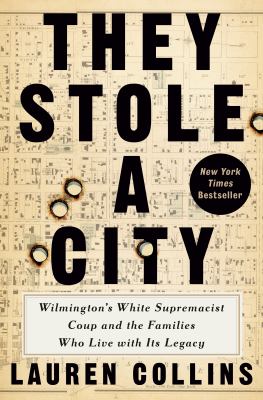
They Stole a City
Wilmington's
White Supremacist Coup and the Families Who Live with Its Legacy
White Supremacist Coup and the Families Who Live with Its Legacy
Authored by: Lauren Collins
"Lauren Collins weaves together stories of four Wilmington, NC, families over 125 years to create a full accounting of the long-term effects of the 1898 white supremacist massacre and coup and its critical role in subverting American democracy. After the Civil War, Reconstruction ushered in an era of political equality and economic opportunity for Black people, and it lasted longer in Wilmington than almost anywhere else. In 1898, Wilmington was a bastion of Black success: Black cultural life flourished, while a thriving Black middle class brimmed with lawyers, educators, and elected officials. The city became a symbol of Black hope -- only for all of it to come to a violent end on November 10, 1898. In this epic, multigenerational narrative, Lauren Collins traces the fates of four Wilmington families: the Howes, the Halseys, the Moores, and the Bellamy/MacRaes, all of whom were present on the day when a mob of white supremacists launched a murderous coup to 'take the city.' After issuing a 'White Declaration of Independence,' white men gunned down scores of Black men, chasing their families into hiding. Then they marched to city hall, where they overthrew the democratically elected, multiracial local government at gunpoint in what is thought to be the only successful coup d'état on American soil. No one knows exactly how many Black citizens they murdered -- surely dozens, likely hundreds -- while driving thousands of survivors and their white allies out of town. Folklore among both Black and white Wilmingtonians holds that the Cape Fear River ran red. While the effects of this episode of racial terrorism would ricochet through the next century of our nation's history, no one was ever prosecuted or punished, and many of the details have been largely -- and deliberately -- forgotten. In collaboration with living descendants of Black and white families, Collins seeks to create a more complete understanding of 1898 than can be drawn solely from the archives. She follows these four families and their descendants through the eras of segregation and Jim Crow, the Great Migration, the Civil Rights movement, and school desegregation, all the way up to the Black Lives Matter and racial justice protests in 2020, emphasizing the lasting and consequential effects of 1898 on the city and people of Wilmington. Weaving together each generation's reckoning with their past and how it has imprinted on their present, They Stole a City is an ambitious and revelatory examination of American racial terror as it has played out in one Southern city, written in the conviction that the story of the 1898 Wilmington massacre and coup is, in fact, a story about America in 2025." -- Provided by publisher
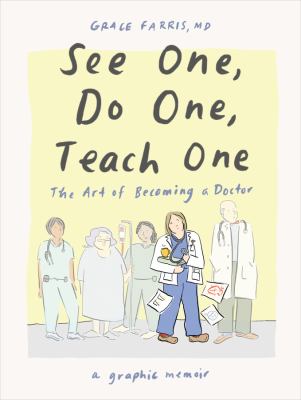
See One, Do One, Teach One
The Art of Becoming a Doctor
Authored by: by Grace Farris, MD
"When do you become a real doctor? Now a celebrated cartoonist and practicing physician, in 2004 Grace Farris began med school with visions of ER and Scrubs. Across cadaver labs, operating rooms, and lecture halls, she embarked on the arduous road to becoming a doctor. In her graphic memoir debut, Grace looks back on her journey through medical school and residency in her iconic palate of pastels. Through candid comics, readers experience the box of bones Grace must take home to study, the overwhelming smell of formaldehyde that emanates from the cadaver she dissects, the endless mnemonics and "-ologies" she must learn, and the racism and sexism that confront her in the healthcare system. As she works grueling, thirty-hour shifts and meets with patients from all walks of life, she discovers moments of joy, too: making her first correct diagnosis, matching at a top residency program, and, when she least expects it, falling in love. At the end of her residency, Grace takes on two new roles -- attending physician and mother. Touching and tender, See One, Do One, Teach One is a vivid portrait of the human side of healthcare and what binds patient and doctor together." -- Provided by publisher
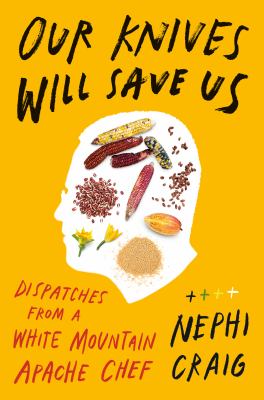
Our Knives Will Save Us
Dispatches From a White Mountain Apache Chef
Authored by: Nephi Craig
"From Indigenous chef Nephi Craig, a personal and cultural reckoning about the power of food to heal intergenerational wounds. When Nephi Craig enrolled in the culinary program at Scottsdale Community College, it was out of necessity--his DUI conviction had left him with three years' probation with either full-time employment or education. He chose school, expecting little more than a means to an end. But what he encountered on his first day was a profound dissonance: not a single other Indigenous person in the room and European recipes that, beneath their French and Italian names, echoed the flavors of his own Apache roots. Calling to mind his roaming childhood on the White Mountain Apache and Navajo reservations, that moment sparked a lifelong pursuit, not just of culinary mastery, but also of cultural rediscovery. Craig began tracing the buried histories of Indigenous cultivars such as the acorn, the squash, and the cacao bean, each one a portal into the violent legacy of colonization. He was hungry to not only better understand the way this history embedded itself in Native foodways but to also build Indigenous food sovereignty and to reconnect people with this rich cuisine. His mission led him around the world, from high-end kitchens in Japan, Germany, and England, to Executive Chef roles across the US. All the while, though, Craig wrestled in the shadows of his alcoholism and substance abuse, entering one addiction treatment center after another in the hopes that he could get--and remain--sober. Unexpectedly, in the heat and rhythm of professional kitchens and in the collaborative energy of top fine dining restaurants, Craig found a lifeline. However, it wasn't until he was faced with the difficult decision of choosing between a career in culinary prestige and one serving the Native communities at home that he found his true vocation. Interweaving personal reflection with searing cultural insight, Craig lays bare the ongoing traumas wrought by colonial violence, from systemic poverty and poor mental health to addiction and suicide within Native communities. At the same time, he offers a vision of hope: one where food is decolonized, history is honored, and healing is possible."-- Provided by publisher
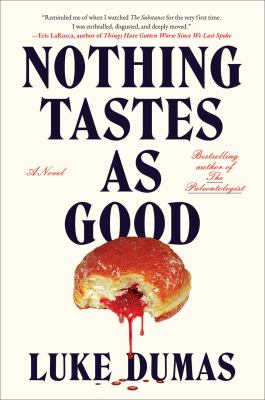
Nothing Tastes as Good
A Novel
Authored by: Luke Dumas
"Retail worker Emmett Truesdale has never fit the Southern California mold of six-pack, suntanned masculinity. Over three hundred pounds, he carries the weight of his childhood trauma and millennial ennui around his waist and in his soul. After trying every diet under the sun, he remains stuck--in his dead-end job, in love, and in his body. Desperate for help, he enrolls in a clinical trial for a new weight loss product called Obexity. The treatment is as horrifying as the results are miraculous and as Emmett sheds pounds at superhuman speed, every part of his life improves overnight. Unfortunately, Obexity comes with some killer side effects, including lost stretches of time and overwhelming cravings. Worse, people who were cruel to him have started disappearing and when the police warn of a cannibalistic killer on the loose, he fears that Obexity is turning him into a monster. But how can he give it up now that people are finally starting to treat him like he's human?"-- Provided by publisher
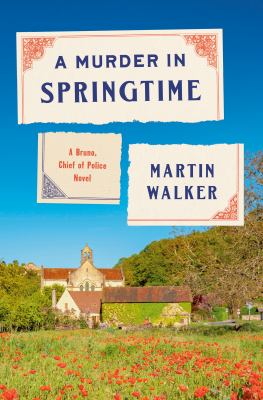
A Murder in Springtime
Authored by: Martin Walker with Kate Walker
"In the next installment of the Bruno, Chief of Police series, a newcomer to St. Denis is found dead in the home of one of Bruno's best friends--for once, Bruno feels as though he is too close to the case to properly investigate, until it becomes clear that he's the only person who can solve the crime. After Bruno sees he's missed several phone calls from his longtime neighbor Pamela, he has no idea what to expect. He's shocked to hear that she's found her new lodger on her back patio, brutally murdered. Bruno knows that Pamela isn't capable of killing anyone, but then who's the culprit? And what's the motive? The victim had only just moved to town to take a job at the local nursing home. She had no enemies in the village--but no friends, either. Bruno decides that he can't be impartial where Pamela is involved, so the force assigns the case instead to their rising star rookie, Fabien. Bruno is happy for Fabien to take the lead. Lately, Bruno's been distracted: by his faltering relationship, by a meddlesome film crew that's descended on the Dordogne, by a group of opinionated small business owners Bruno wants to help to organize a logistically complicated night market. He can't seem to catch a break. But when Fabien realizes that the victim is connected to his own past, Bruno steps back in to help. The village has never felt more crowded, and the clock is ticking: Will Bruno and Fabien be able to catch a killer?"-- Provided by publisher
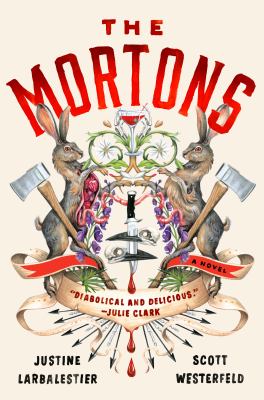
The Mortons
Authored by: Justine Larbalestier and Scott Westerfeld
"Scott Westerfeld and Justine Larbalestier have now teamed up for the first time to write The Mortons--a supremely accomplished novel of psychological suspense that feels destined to be a contemporary literary classic. The Mortons are a modern day, old-money dynasty with impeccable taste, from their exquisitely crafted cocktails to their expertly tailored vintage garments. They are also stone-cold killers, with a history and legacy dating back to ancient times (think Succession byway of The Sopranos). For the Mortons, homicide is heritage. They, along with the other legacy crime families, send their college-aged progeny to Helshire College--a Brideshead-esque setting where the legacy kids strategically intermingle with the ordinaries from wealthy families, taking classes like Disruptive Anatomy and Forensic Accounting and practicing the long-game seduction of ordinaries as clients. Jessica Morton has always excelled at Helshire, secure in her knowledge that she is the prodigy of her generation of Mortons--and now she is finally able to stake her claim as a full blooded Morton, having committed her first kill at her matriarch's behest. This is her moment, her honor. But that kill will cut more ways than one--unknotting deep secrets that propel a series of revelations--spanning the Mortons' country estate, the New York City art world, and Helshire itself. Revelations more shocking than the bodies piling up. What happens to the prodigal daughter caught in the embrace of her ancient, gracious, wounded, exquisite, cruel, everlasting family, when all of her dearly-held certainties about power, loyalty, and love face the axe."-- Provided by publisher
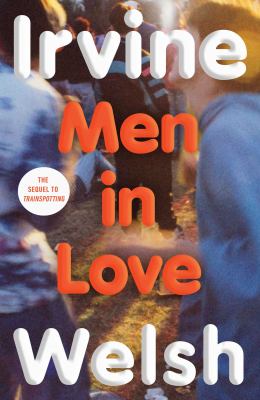
Men in Love
A Novel
Authored by: Irvine Welsh
There wasn't an album they wouldn't buy, or a drug they wouldn't try. Then it spiralled out of control. They were left with nothing. Nothing but the eternal quest of all men - the search for love. Opening in the late 1980s as rave culture is born and moving into the 1990s, 'Men In Love' reunites the Trainspotting crew for a riotous new journey. Renton, Spud, Sick Boy and Begbie leave heroin behind and seek joy, and the hope of redemption, on the dance floor. Each wants to feel alive in the closing years of Thatcher's Britain, and they fill their days with sex and romance and trying to get ahead. Taking in Edinburgh, London, Amsterdam and Paris, the group charges towards an unexpected event - Sick Boy's wedding day. But is falling in love the answer, or just another doomed quest?
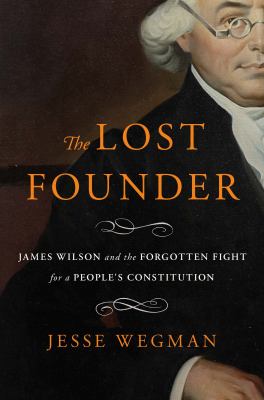
The Lost Founder
James Wilson and the Forgotten Fight for a People's
Constitution
Constitution
Authored by: Jesse Wegman
"New York Times journalist Jesse Wegman tells the story of James Wilson, a Founding Father whose vision shaped American democracy but whose legacy was lost to scandal. As a young lawyer, James Wilson made a celebrated case for American independence in an essay that inspired the famous words: 'We hold these truths to be self-evident, that all men are created equal.' He went on to write the first draft of the Constitution and, along with James Madison, played a role in its ultimate creation. Wilson believed that in a democracy, the people were the ultimate source of all power. He argued successfully for a strong central government and a powerful presidency and unsuccessfully for a president elected by popular vote and a Senate apportioned by population. He was recognized for his ideas and leadership. But only a decade after the Constitution was ratified, he died of malaria in the back room of a North Carolina tavern while hiding from his creditors. Jesse Wegman argues that scandal should not diminish the life and relevance of this brilliant, complicated man."-- Provided by the publisher
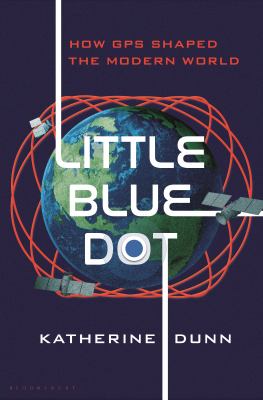
Little Blue Dot
How the Global Positioning System Shaped the Modern World
Authored by: Katherine Dunn
"Gone are the days when we pulled off to the side of the road, twisted a map this way and that, and squinted in exasperation before saying, "We're lost." Now, a network of satellites that circles the earth points us in the right direction. The Global Positioning System is embedded not only in our phones but in our cultural history and our future. GPS, intangible but ubiquitous, has instigated a radical shift in our relationship to our own intuition and place in the world, making us critically dependent on technology we forget is even there. Little Blue Dot uncovers GPS's origins as a product of the Cold War, from the Space Race to the bombing campaigns in Vietnam, following along as its military and civilian uses expanded and shifted to become part of the fabric of modern life. With pulsating detail and witty expertise, investigative reporter Katherine Dunn takes us on a fascinating journey from the origins of the technology to its modern-day iteration, considering its role in international politics and conflict--and its rising vulnerabilities to manipulation. Initially a cog in the wheel of globalization, GPS has now taken on a new life and may even serve as a parable for the proliferation of AI and newer technologies on the horizon. Sharp and evocative, Little Blue Dot considers the future of GPS, its impact on our understanding of space and time, and the role of technology in our lives."-- Publisher's description
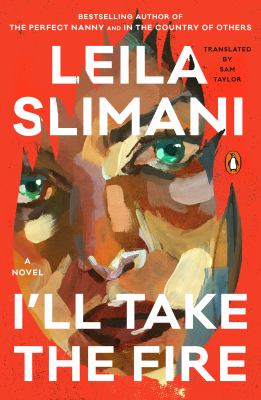
I'll
Take the Fire
Authored by: Leila Slimani
Translated from the French (Moroccan) by Sam Taylor
Mia Daoud yearns to be free. A child of Morocco in the politically and socially turbulent 1980s, she flees her family and her homeland to seek her own place in the world. Years later, she finds it as a famous author, only for a bout with a virus to jeopardize her memory and the novel she wants to write about her past. When she's advised to retrace her history to reclaim her present, Mia journeys around the world in search of herself, from Casablanca to Paris to New York, from the fall of the Berlin Wall to 9/11, and finally back to her grandparents' farm in Morocco, where her story first began.
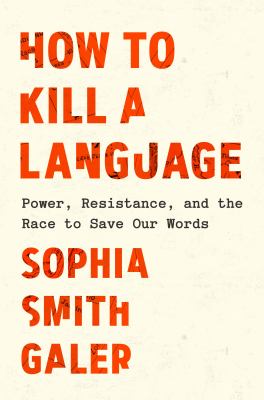
How to Kill a Language
Power, Resistance, and the Race to Save Our Words
Authored by: Sophia Smith Galer
"A globe-spanning exploration of languages at risk, from Kichwa to Ukrainian, that asks: What do we lose-culturally, politically, and personally-when a language is silenced?" -- Provided by publisher
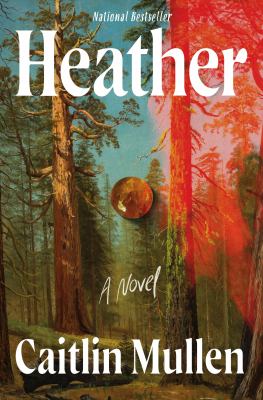
Heather
A Novel
Authored by: Caitlin Mullen
"1990. In the myth-riddled woods of the New Jersey Pine Barrens, sixteen-year-old Annabelle Riley's twin sister, Sabrina, has been having an affair with a mysterious older man, and Annabelle is determined to uncover what's going on. Then, inexplicably, both sisters disappear. In this same town years later, newly instated police chief Callie Hauser makes an arrest that unexpectedly resurrects details from a heartbreaking cold case. As she digs deeper, the past and the present collide, challenging everything Callie believes about right and wrong, who she is, and the town she's always called home." -- Jacket flap
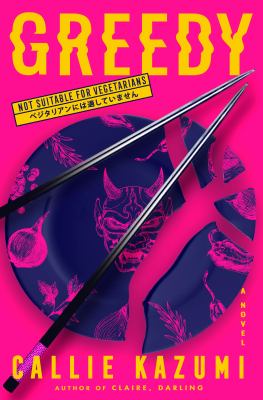
Greedy
A Novel
Authored by: Callie Kazumi
What would you do for a seat at the table? In this deliciously dark thriller set in Japan, a desperate gambling addict masquerades as the private chef to a reclusive billionaire with deadly taste--from the twisted mind behind Claire, Darling.
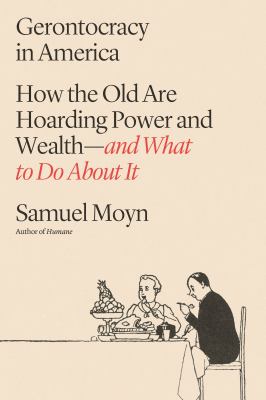
Gerontocracy in America
How the Old Are Hoarding Power and Wealth - and What to Do about It
Authored by: Samuel Moyn
"A leading social critic identifies our least-discussed major crisis, and sets out to solve it."-- Amazon
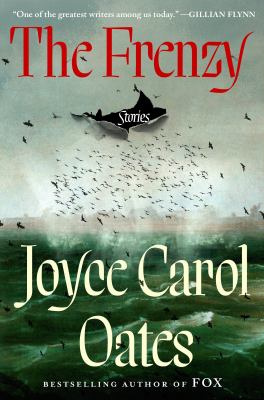
The Frenzy
Stories
Authored by: Joyce Carol Oates
"Frenzy (noun): a temporary madness; a violent mental or emotional agitation; intense usually wild and often disorderly compulsive or agitated activity. Joyce Carol Oates is a master of the short story and one of the legends of the form. Her collections of short fiction have twice been finalists for the Pulitzer Prize and have won numerous awards, including the O. Henry Award and the PEN/Malamud Award for Excellence in the Art of the Short Story. In The Frenzy: Stories, Oates plunges us into the lives of her characters at moments of crisis and confusion, when much of what they understand about themselves and those they love comes undone. A young woman on a supposedly romantic weekend trip to Cape May, New Jersey, turns the tables on her older, married lover. An alienated boy learns that life is not a video game. A freak bicycle accident on a bridge haunts one family for decades. A girl jealous of her popular cousin discovers she is the lucky one. A widow waits at her riverside house for her dead husband's return. A young man hiking in the woods comes upon a couple in a heated, possibly violent argument--should he intervene? Suspenseful and psychologically astute, Oates's short stories enthrall and captivate as they dissect her character's deepest fears--revealing our own in turn. 'Literature is a texture of words,' says Oates of her short fiction, 'evoking life in the most vivid ways--psychologically, physically.' These new stories blazingly evoke life at its most vivid and perilous, when fate and free will intersect, and one ominous encounter or bad choice can be the difference between an ordinary day and the point of no return."-- Provided by publisher
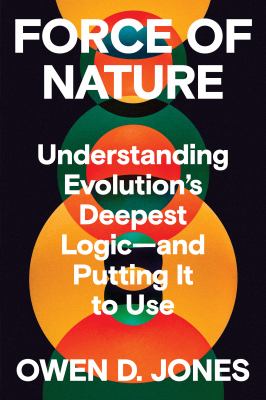
Force of Nature
Understanding Evolution's
Deepest Logic--and Putting It to Use
Deepest Logic--and Putting It to Use
Authored by: Owen D. Jones
"Most of us learned about natural selection back in high school science class and think we understand it pretty well-or, at least, we get the basics of how it works. Many of us even have a sense of its implications for everyday life, like how we should be cautious about overusing antibiotics, but also take care to finish out a full prescription even after we're already feeling better. Yet studies show that significant misconceptions about evolution and natural selection abound, even among highly educated specialists in biology, from medical students to high school biology teachers-not to mention the rest of us. In Force of Nature, professor of biology and law Owen D. Jones shows how we misunderstand and neglect natural selection to our detriment, both missing opportunities to better achieve our goals and, sometimes, even imperiling lives and livelihoods. Ranging across the natural world and spheres of human endeavor alike, from medicine, agriculture, and AI to economics, law, and beyond, Jones demonstrates how a finer appreciation of the speed, scale, and applications of natural selection-including its influence on behavior, both human and animal-can help open new horizons in cancer treatment and space exploration; create faster machines and more maneuverable robots; design more effective, just laws; and more. We all know that evolution put us here in the first place, but Force of Nature shows how a richer understanding of it can be even more useful than we may think." -- Provided by publisher
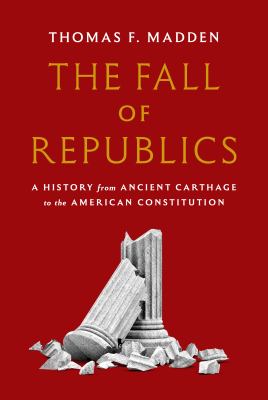
The Fall of Republics
A History From Ancient Carthage to the American Constitution
Authored by: Thomas F. Madden
"What caused the world's great republics to fall -- and what their fate reveals about the dangers facing modern democracies today. In this timely book, distinguished historian Thomas Madden explores the people, events, and factors that led to the collapse of some of the world's most enduring republics -- from Carthage to Rome to Venice and beyond -- and examines the worrying lessons these failures hold for the United States and other democracies today. The Fall of Republics not only tells the story of fallen states but also opens a window into how modern democratic republics were built on the ashes of the old. From Machiavelli to John Adams, philosophers and statesmen applied the lessons of lost republics to forge new ones that they hoped would be inoculated against the calamities that brought down their predecessors. The book reveals that republics thrive because they pit interests and powers against each other, balancing them across government branches to ensure stability and avoid tyranny. Republics are strengthened by adversity, which unites citizens despite their differences, and weakened by prosperity and security, which breeds division and partisan strife. With their eyes on the ancient world, America's founders built important safeguards into the Constitution-- but those safeguards are being tested today as the United States accumulates historical hallmarks of broken republics, from political violence to the politicization of the courts. The Fall of Republics offers valuable lessons and insights about what threatens republics -- and what's needed to keep them alive."-- Front jacket flap